




Rising Carbide Prices: When Cermet Makes Sense
As access to critical raw materials becomes increasingly constrained, manufacturers are re-evaluating how cutting tool materials are used across different machining stages. While carbide remains essential for many operations, its widespread use is not always technically necessary, particularly in finishing processes.
In these applications, the focus shifts from load capacity to process stability, surface quality, and efficient material usage. This is where cermet becomes a rational and engineered alternative.
Using Less Carbide by Design
Carbide is indispensable in rough and heavy cutting. However, finishing operations typically involve:
- Shallow depths of cut
- High cutting speeds
- Low cutting loads
- Continuous or lightly interrupted cuts
Under these conditions, the full toughness and material volume of carbide are often underutilized.
Cermet—derived from ceramic and metallic components—is engineered specifically for this operating window. By reducing reliance on carbide while maintaining cutting performance, it offers a practical response to material scarcity without compromising machining results.
Where Cermet Performs Best
Cermet is not a universal substitute. Its value lies in correct application.
Optimal use cases include:
- Finishing and light semi-finishing
- Continuous cutting and light interruption
- Stable machining conditions
- Operations where surface finish is critical
When applied within this range and supported by appropriate cutting conditions, productivity can be maintained while improving surface consistency and tool wear predictability.
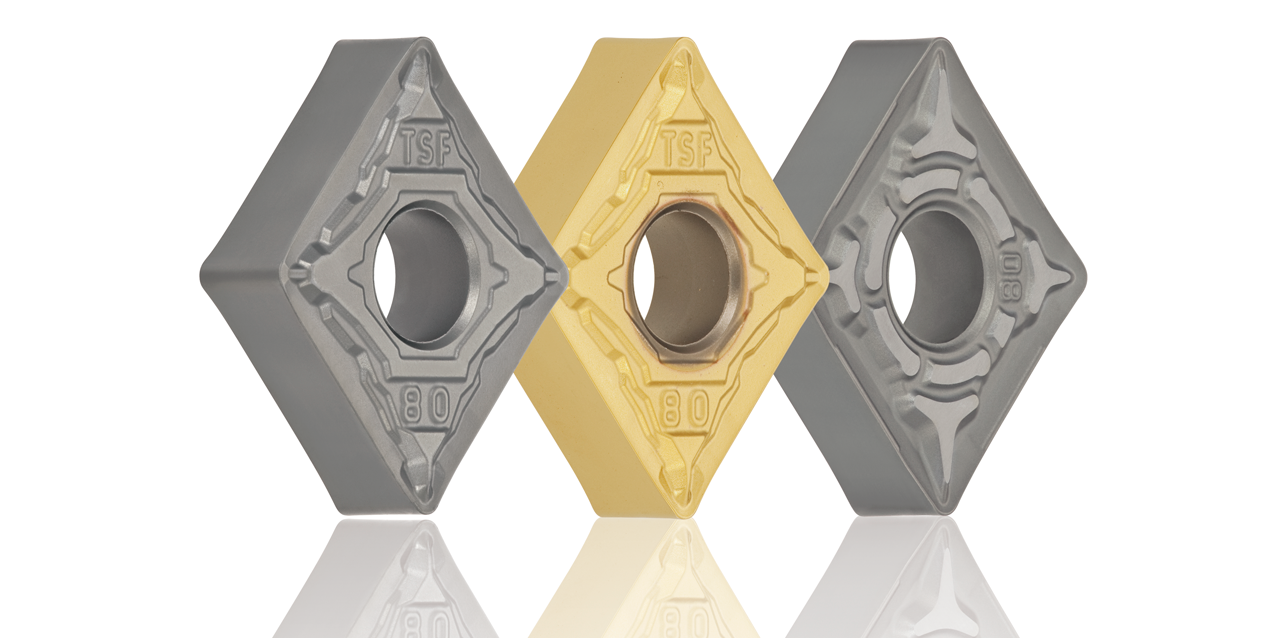
Tungaloy Cermet Grades for Finishing Applications
Tungaloy Corporation offers a focused cermet lineup designed for finishing and light cutting operations in steels and alloy-steels:
- NS9530 – Balanced toughness and wear resistance for stable finishing to medium cutting
- GT9530 – Optimized for surface finish and wear resistance in precision finishing
- AT9530 – Designed for alloy steels, delivering consistent surface quality in continuous cutting
Rather than expanding grade complexity, this lineup is structured to cover typical finishing conditions with clarity and predictability.
Engineering Productivity—Not Substitution
Adopting cermet is not about replacing carbide everywhere. It is about engineering the process.
From a production standpoint, using cermet where conditions allow can:
- Reduce dependence on carbide resources
- Maintain stable productivity in finishing operations
- Deliver high and consistent surface quality
- Improve cost efficiency at the process level
The key is alignment: matching material, geometry, and cutting conditions to the actual demands of the operation.
A Smarter Allocation of Materials
As resource availability becomes a long-term concern, machining strategies must evolve beyond material overuse. Cermet represents a targeted, application-driven solution—one that supports finishing performance while using less carbide by design.
In today’s environment, efficiency is no longer just about cutting faster. It is about using the right material, in the right place, for the right reason.