



Introducing Gabby, Tungaloy’s AI Assistant for Tool Selection
Tungaloy Corporation introduces Gabby, an AI-powered assistant designed to help metalworking professionals quickly identify suitable tooling solutions through natural language interaction.
Selecting the right cutting tool often requires evaluating multiple variables, from workpiece materials and machining operations to cutting conditions and tool geometries. Accessing the right information quickly is essential for maintaining efficient and stable machining processes.
Conversational digital tools are beginning to change how machining knowledge is accessed and applied. Gabby was developed to simplify this process, allowing users to interact with technical information in a more intuitive way.
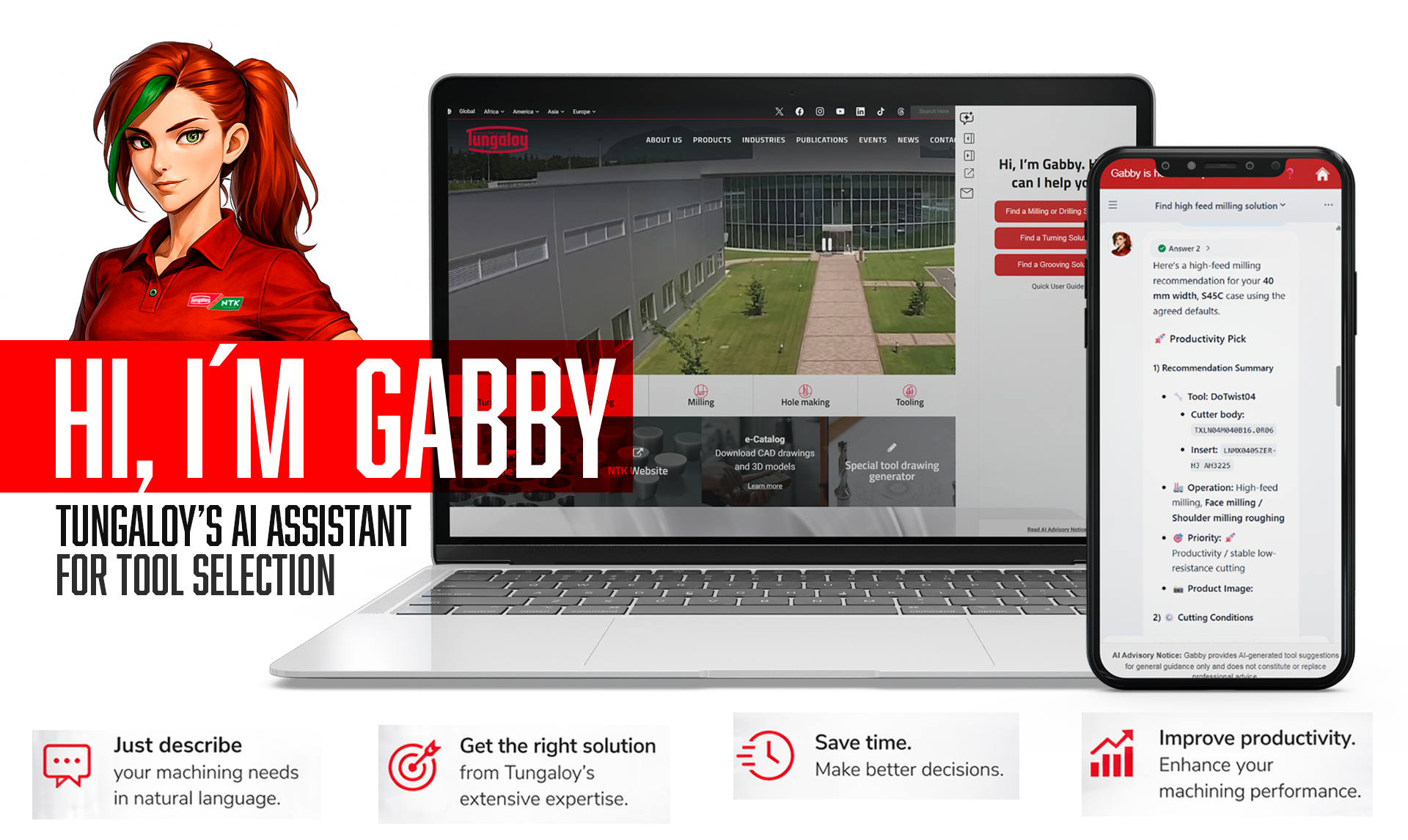
Describing Machining Needs in Natural Language
Gabby allows users to describe their machining requirements using natural language. By entering basic information such as the machining operation, workpiece material, or basic machining conditions, the system interprets the request and suggests relevant tooling solutions.
The assistant supports a wide range of machining applications, including:
- Milling
- Hole making
- External turning
- Internal turning
- Grooving
This conversational approach enables users to interact with technical information more intuitively, helping reduce the time required to search catalogs or navigate complex product structures.
Gabby is available through Tungaloy’s websites and the Tungaloy mobile application.
Access to Gabby here: https://tungaloy.com/gabby/
Expanding Digital Support for Metalworking
The introduction of Gabby expands Tungaloy’s digital ecosystem with a new AI assistant for tool selection, designed to simplify how users explore machining solutions and product information.
As part of Tungaloy’s commitment to practical, efficiency-driven digital solutions for the metalworking industry, Gabby will continue evolving as new machining knowledge and application data expand its capabilities.
Note: Gabby provides general guidance based on available technical data. Final tool selection and machining conditions should always be verified according to specific production requirements.